It is nice, that we got two other users of sewing machines here. I like you to read my first two posts in this thread including the links. I am sorry to say, that I do not agree with more of your statements, celer. But I hope, that we can get a good exchange of opinions.
I do not agree, that this motor got excellent low speed motor control at all. I found video about this servomotor:
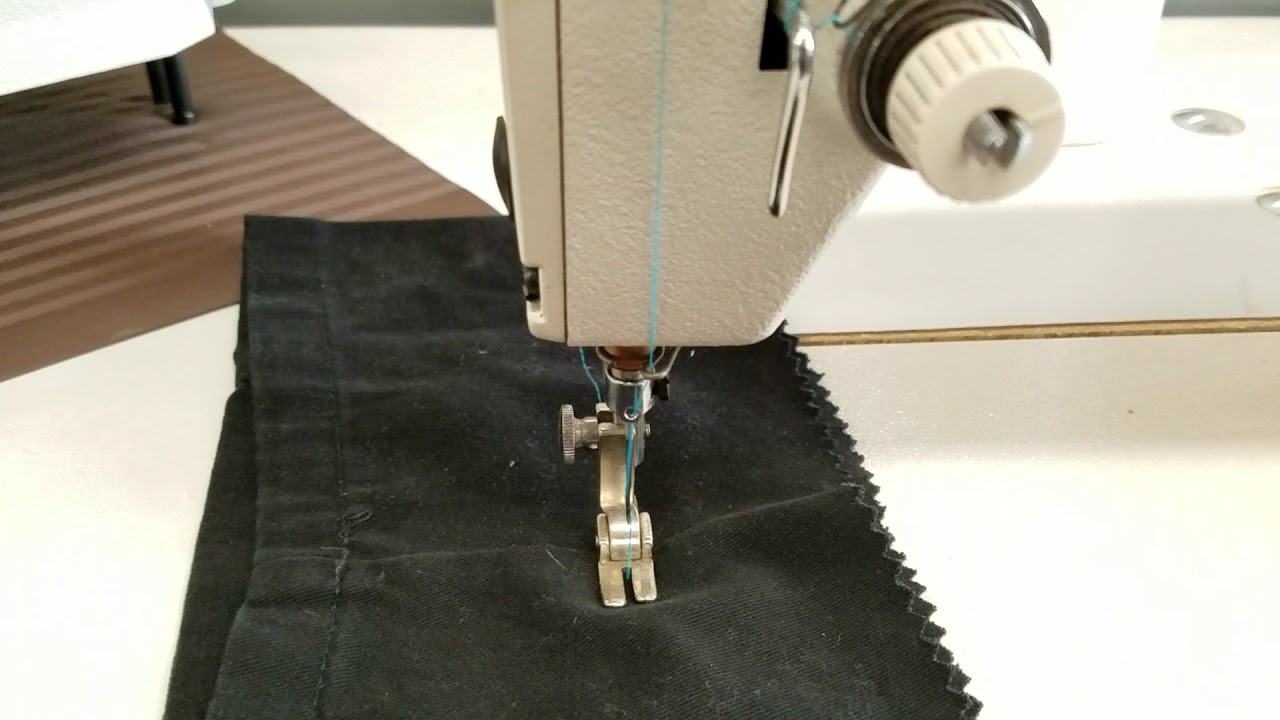
You see, that the lowest speed setting is 5, at it will normally mean 500 rpm. It might be lower, but normally you cannot have these kind of servo motors for sewing machines run below 100 rpm. It means that the speed range might be 500 - 6000 rpm or perhaps 100 - 6000 rpm. It is a speed range of 1:12 or 1:60. But I like to have a speed range of 1:250 at least.
I have seen one expensive brand of servo motors, EFKA. Some of their motor drives can manage down to 10 rpm on motor.
I agree, that you need needle stop with a good sewing machine drive. But you should be able to do an easy switch on an off of needle stop, and to move to next position easily. The good low speed control is needed, when you do not want to use needle stop, and with some sewing jobs you do not want needle stop.
Many of the needle stops, that you get for the industrial sewing machines are made wrong, because the stops are spaced 180 degrees, and it should not be like that. The upper needle stop is easy, and should be at highest needle position. Some more advanced machines may drop the feed dogs as well for easy removal of fabric. The low needle stop needs to be later than lowest needle position and after the hook have gripped the upper thread. So it will typically be with the top of the needle eye at surface of needle plate. In this way you can turn the fabric without the risk, that the hook may not catch the thread at next stitch.
Most servo motors for industrial sewing machines on the market place do not use FOC, but they have got 3 digital hall elements in the motor, that controls the commutation to 6 positions in every electrical cycle. On top of that they use PWM. I consider this as an old outdated way of motor control. Furthermore, they have got an optical encoder inside, but they will normally have below 100 lines. It limits their possibility for good low speed control.
Therefore my aim for a new motor drive is to get significantly better performance, and the motor size should be smaller and not like the bulky industrial servo motors.